Rouge
Aesthetics
Home · Services · Dermal Fillers · All Dermal Fillers
Dermal Fillers in Columbus, OH

Dermal fillers. Your proportions first.

If your face reads flat in photographs, the support underneath has changed, not the skin. Filler is gel placed against bone.

Book a consultationAsk us where to start
Portrait of a woman resting both hands against her cheeks, muted teal background

Dermal Fillers at a glance

Dermal fillers are cross-linked hyaluronic acid gels, replacing lost facial volume or adding projection. Most areas take 1 to 2 syringes and last 9 to 18 months. Hyaluronic acid filler can be dissolved with hyaluronidase, which is an off-label use of that enzyme.

9–18
Months most hyaluronic acid filler lasts
The area predicts that number more reliably than the brand does, and the firmest structural gel is labeled for up to 2 years at the cheek.

What are dermal fillers, and what are they not?

Dermal filler is cross-linked hyaluronic acid, a molecule your body already makes. It goes deep against bone, supporting the tissue above the crease. If you decide you do not want it, hyaluronic acid filler can be dissolved with hyaluronidase, which is an off-label use of that enzyme.

  • Not a facelift: volume added, nothing removed
  • Not a relaxer: resting lines sit in skin
  • Not forever: hyaluronic acid breaks down

How do the filler families actually differ?

Brand rarely decides the result. Cross-linking, the stitching between hyaluronic acid strands, and cohesivity, how strongly a gel holds together, do.

  • Juvéderm®: smooth, cohesive, holds shape at bone
  • Restylane®: firmer, granular, or flexible for lips

How these compare

FamilyWhat it isHandlingWhere it is most often usedTypical durationReversible with hyaluronidase
Juvéderm®Cross-linked hyaluronic acidSmooth and cohesive, holds an edgeCheek and midface, chin, jawline, lips9 to 18 months by area, up to 2 years at the cheekYes
Restylane®Cross-linked hyaluronic acidFirmer and more granular, sits where placedLips, chin, cheek, back of the hands9 to 18 months by areaYes
Sculptra® (not a filler)Poly-L-lactic acid, a collagen stimulatorAdds no immediate volume; prompts collagenDiffuse volume loss across several regionsBuilds over 3 to 6 months, typically lasts about 2 yearsNo

The families, plus one collagen stimulator. Ranges are drawn from current U.S. product labelling and from practice observation.

How the filler families compare, with one collagen stimulator for contrast

Juvéderm® Voluma® XC — FDA-approved for cheek augmentation to correct age-related midface volume deficit, and for chin augmentation to improve chin retrusion, in adults over 21. Firm and cohesive, so it holds an edge at the bone, and labeled for up to 2 years at the cheek.

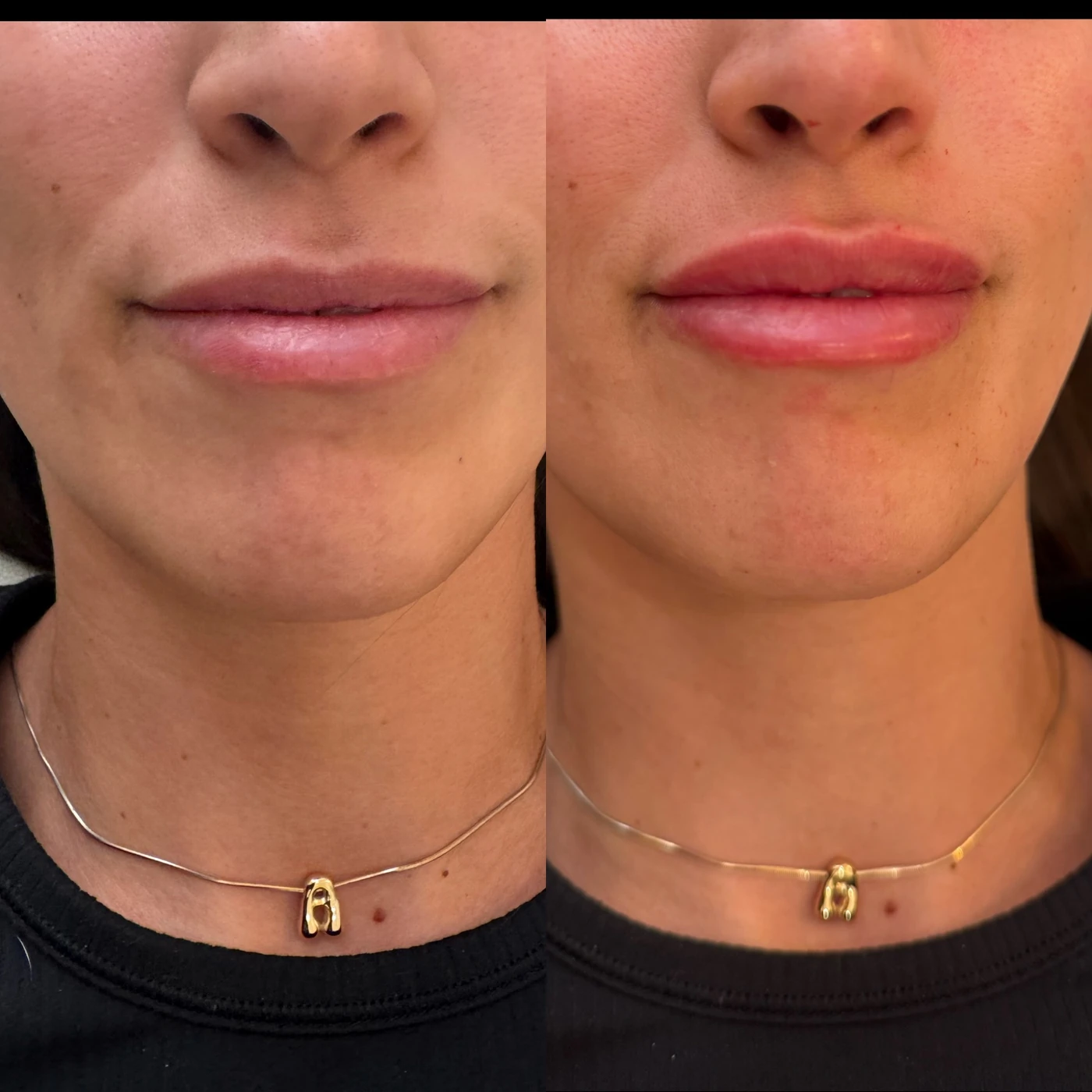
Juvéderm® Ultra XC — FDA-approved for lip augmentation in adults over 21. Contains lidocaine. Typically 0.5 to 1 mL at a first lip appointment, not more.

Juvéderm® Volux® XC — FDA-approved for improvement of jawline definition in adults over 21. The firmest gel in this family, which is why it is used at bone and not in soft tissue.

Restylane® Lyft — FDA-approved for cheek augmentation, for moderate to severe facial folds and wrinkles such as nasolabial folds, and for correcting volume deficit on the dorsum of the hands, in adults over 21.

Restylane® Defyne — FDA-approved for the correction of moderate to severe deep facial wrinkles and folds, in adults over 21, and for chin augmentation to correct retrogenia, meaning a chin that sits back behind the lower lip on the profile view.

Hyaluronidase — Hyaluronidase is FDA-approved as an adjuvant to increase the dispersion and absorption of other injected drugs. Using it to dissolve dermal filler is an off-label use. It is kept in the building for every filler appointment.

From assessment to your two-week review

01

Assessment

We ask what bothers you first. Your face is read upright, animated, on profile.

02

Plan and price

Areas, likely syringes and a total range, written before anything is drawn up. Where filler is not indicated, the plan says so in writing and names the reason.

03

Placement

Topical anesthetic, then needle or cannula. Most first appointments treat one or two areas.

04

See results

Ask about follow-up timing, contact arrangements, and any additional charges before treatment.

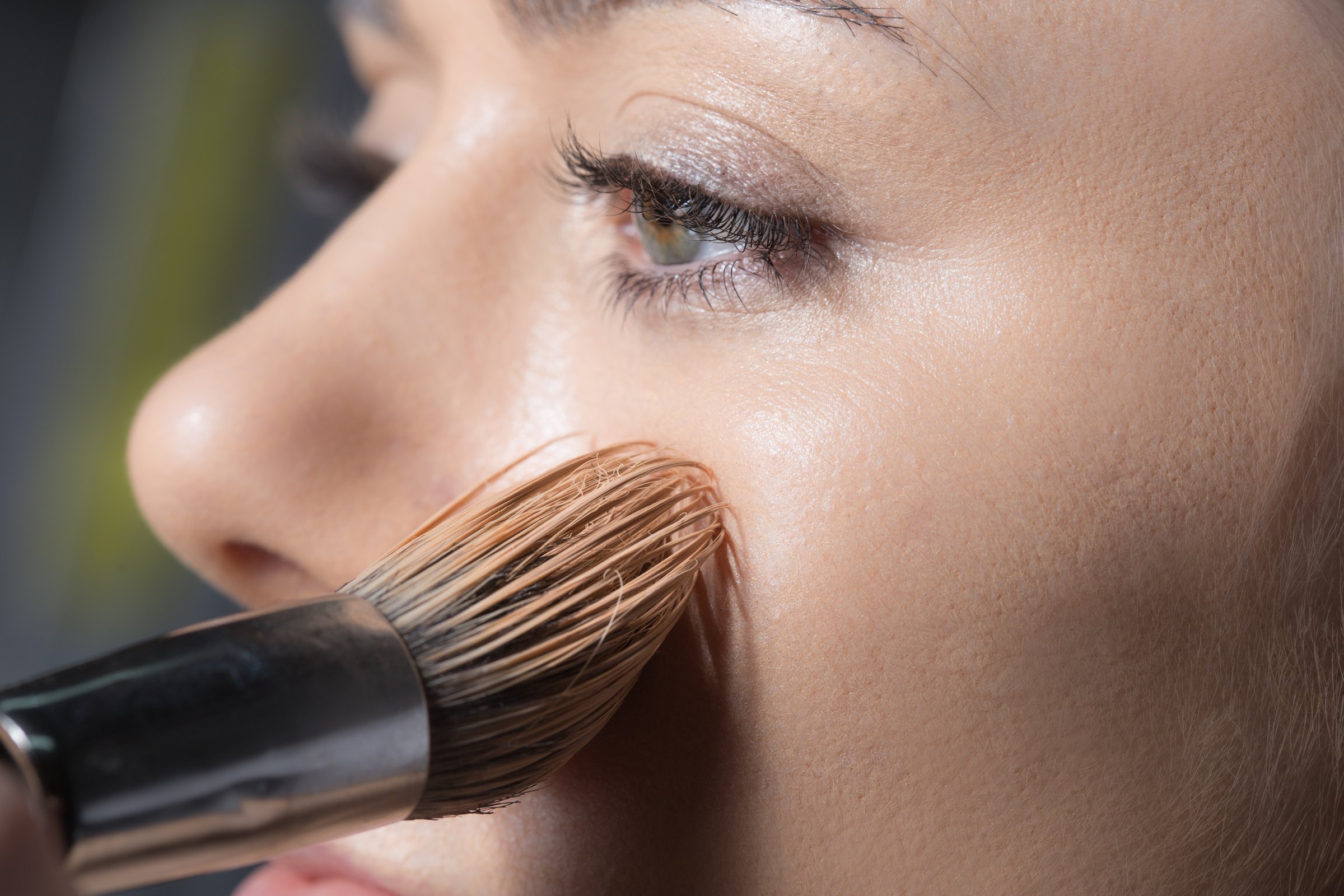
Profile close-up of a cheekbone catching soft light, a make-up brush at the edge of frame
Most of your appointment is talking: 30 to 45 minutes.

What happens at a dermal filler appointment?

Topical anesthetic sits 20 minutes, most gels carry lidocaine, placement feels like pressure.

  • Topical numbing, about 20 minutes
  • Needle or blunt cannula, by region
  • Hyaluronidase and a written complication protocol on site
  • Two-week review booked before you leave

How long does dermal filler last, area by area?

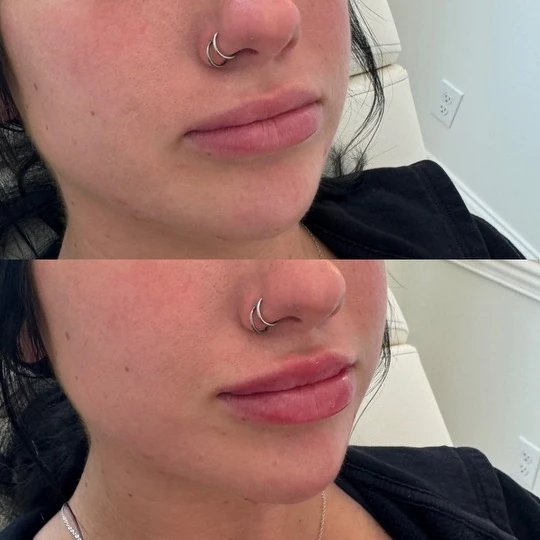
A change is visible on the day; judge it at two weeks. Filler lasts 9 to 18 months, and the area predicts that, not the brand. Lips break gel down fastest.

Lips
9 to 12 months, from 0.5 mL
Cheek and midface
12 to 18 months
Chin
12 to 18 months, on profile
Jawline
12 to 18 months, 2 to 4 mL
Under-eye and temple
9 to 12 months. Juvéderm® Volbella® XC is approved for infraorbital hollows and Juvéderm® Voluma® XC for temple hollowing, in adults over 21; any other gel placed in those areas is an off-label use

Who is dermal filler for?

A good candidate

  • A deficit you can point to
  • Adults over 21 in stable general health and at a stable weight
  • Wanting something reversible; hyaluronic acid dissolves
  • Willing to start with one area
  • Skin quality that supports added volume
  • Room for 3 to 7 days of bruising

Not a candidate

  • Known severe allergy or anaphylaxis history, allergy to lidocaine in the XC gels, or allergy to gram-positive bacterial proteins
  • Bleeding disorders, or anticoagulation not yet discussed with your prescriber
  • Non-dissolvable filler already there, or an undiagnosed lump
  • Loose skin, or weight still changing

Worth waiting for

  • Pregnancy or breastfeeding. Hyaluronic acid fillers have not been studied in these groups
  • Active infection, inflamed skin, cold sore or active acne

The first two weeks

01
Stay upright four hours. Do not press, massage or sleep on it.
02
Ice 10 on, 10 off, over a cloth, 24 hours.
03
Skip alcohol, heat and hard exercise for 48 hours. Never stop a prescribed blood thinner yourself.
04
Dental work, facials, energy-based treatments: wait two weeks. Swelling 2 to 5 days.
05
Bruising lasts 3 to 7 days. Acetaminophen fine; no aspirin or anti-inflammatory.
06
Ask about follow-up timing, contact arrangements, and any additional charges before treatment.
07
Keep the two-week review even if you are pleased.
Swirl of pale cream in a shallow jar, warm overhead lightPortrait of a woman in soft indoor lightProfile close-up of a cheekbone catching soft light, a make-up brush at the edge of frame

What patients ask about dermal fillers

How much filler will I actually need?

Most single areas take 1 to 2 syringes: lips 0.5 to 1 mL, midface 1 to 2 mL per side, jawline 2 to 4 mL. Adding at two weeks is easy; reversing an overcorrection means dissolving and waiting.

How much does dermal filler cost?

Ask about follow-up timing, contact arrangements, and any additional charges before treatment.

Does getting filler hurt?

Less than most people brace for: patients describe pressure rather than sharp pain. Topical anesthetic sits about 20 minutes first, most gels contain lidocaine, and a blunt cannula with a rounded tip reduces bruising. Lips are numbed longer.

Can filler be dissolved if I hate it?

Yes, and knowing that changes the size of the first decision. Hyaluronic acid filler can be broken down with hyaluronidase, usually visible within 24 to 48 hours. Dissolving filler is an off-label use of hyaluronidase, and the enzyme is not selective, so some of your own hyaluronic acid goes with it and takes a few weeks to come back. Collagen stimulators such as Sculptra® cannot be reversed this way.

Will filler make me look done?

Overfilling is what looks done, not filler itself; it accumulates: volume added to the same plane over years, each visit judged against the last instead of a baseline. Photographs at fixed distance and lighting make that drift visible.

Does filler migrate?

It can, most often in the lips and under the eyes, where tissue is mobile and skin thin. Migration is associated with superficial placement, large volumes and treating again too soon. Less, and deeper, reduces that risk.

Is under-eye filler safe?

Under-eye filler carries a higher risk profile than most areas. Juvéderm® Volbella® XC is approved for infraorbital hollows in adults over 21, so that placement is on-label for that one gel, and any other gel used in the tear trough is an off-label use, which means the FDA has not reviewed that particular use. The skin there is the thinnest on the face, treated with a cannula in small volumes. Gel replaces volume, not color: a shadow cast by a prominent orbital rim looks the same afterwards.

How far ahead of a wedding or event should I book?

Book dermal filler at least four weeks before an event; six is better. Swelling settles over 2 to 5 days, bruising can last 3 to 7 days, and the shape is readable at two weeks, when adjustments happen.

What are the real risks?

Here they are, ordered by how likely each one is. Common and self-limiting: swelling, bruising, tenderness and small lumps that settle within two weeks. Uncommon: infection, asymmetry needing adjustment, or a delayed inflammatory nodule months later, which the U.S. Food and Drug Administration has described in a safety communication on delayed swelling after illness or vaccination. Rare and serious: vascular occlusion, where filler blocks a blood vessel and cuts off the blood supply to the skin that vessel feeds, threatening that skin or, very rarely, vision. The FDA has issued a separate safety communication on unintentional injection of filler into a blood vessel, which is why hyaluronidase and a written protocol are kept on site and why escalating pain or any vision change is assessed the same day.

Do I have to keep getting filler forever?

No, and nothing is lost by stopping. Hyaluronic acid filler breaks down and the tissue returns to its own trajectory, not to something worse. What patients notice is the support they had grown used to, not a penalty.

Important safety information

This page is general information, not medical advice, and not a substitute for an in-person evaluation. Dermal filler requires a consultation and a medical eligibility review, and treatment is provided only where it is indicated.

Hyaluronic acid fillers are FDA-approved product by product and area by area. Juvéderm® Volbella® XC carries a US indication for infraorbital hollows and Juvéderm® Voluma® XC for temple hollowing, both in adults over 21; every other gel used in those two areas is off-label, as is the use of hyaluronidase to dissolve filler. Off-label use is legal and common in medicine, and the status of each product used is named before consent.

Juvéderm® is a registered trademark of Allergan Aesthetics, an AbbVie company. Restylane® and Sculptra® are registered trademarks of Galderma. Rouge Aesthetics is not affiliated with, sponsored by or endorsed by those companies. Individual results vary, and nothing here is a promise of a specific result.

Book

Start with a conversation

Visit us
101 Mill Street, Suite 210, Gahanna, OH 43230
Or call
(614) 425-1633
Treatments
Wrinkle RelaxersDermal FillersCollagen StimulatorsRegenerative
More
Intimate WellnessAnti-AgingFat ReductionFacial Balancing
Practice
AboutPricingMembershipContact
Legal
PrivacyPatient PrivacyAccessibilityResults

Rouge Aesthetics · 101 Mill Street, Suite 210, Gahanna, OH 43230 · (614) 425-1633
Individual results vary. This website provides general information and does not replace an individual consultation.