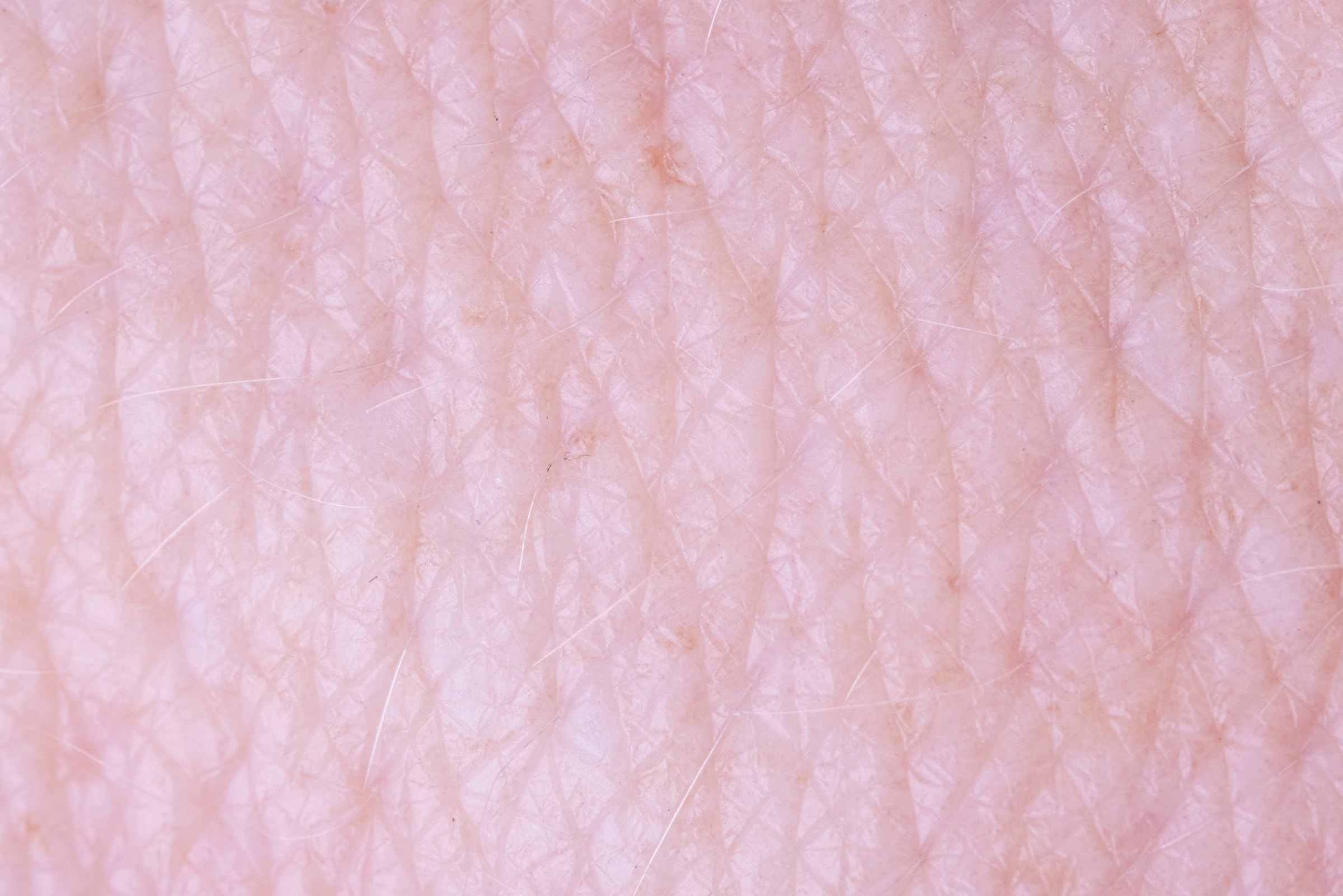
Microneedling opens thousands of narrow channels, and plasma from your own blood goes on while they are open. Three sessions.
Book a consultationWhat the plasma adds
PRP microneedling pairs needling passes with platelet-rich plasma from your blood. Three sessions, four to six weeks apart. The needling device is FDA-cleared, but platelet-rich plasma has no FDA-approved aesthetic use for skin, so the plasma half is a provider-directed use of an unapproved preparation rather than an off-label use of an approved one.
You may have found this under a trademarked name. Underneath it, two things: needling passes, and platelet-rich plasma (PRP) from your own blood.
Needles go to a set depth, 0.5 to 2.5 millimeters. They reach the papillary dermis, the upper dermis. Fibroblasts lay down type I and type III collagen over three months.


| Treatment | What is applied | Preparation | Typical downtime | Sessions usually advised | Regulatory status |
|---|---|---|---|---|---|
| Microneedling | Nothing beyond the needling passes | No blood draw | 1 to 3 days | 3 to 4, about 4 weeks apart | Device 510(k)-cleared for facial acne scars in adults 22 and older |
| PRP microneedling | Platelet-rich plasma from your own blood | 15 to 30 mL drawn, spun five to ten minutes at higher speed with an anticoagulant | 2 to 4 days | 3, 4 to 6 weeks apart | Cleared device and cleared PRP system; no platelet preparation is FDA-cleared or approved for facial skin quality, so this is a provider-directed use of an unapproved preparation |
| PRF microneedling | Platelet-rich fibrin from your own blood | Drawn and spun slower with no anticoagulant, forming a fibrin scaffold | 2 to 4 days | 3, 4 to 6 weeks apart | Cleared device; no FDA-cleared or approved PRF product for facial skin quality, so this is a provider-directed use of an unapproved preparation |
Scarring is the deciding variable. These three differ in what is applied and how it is prepared. Ranges reflect device labeling and our own observation.
Autologous platelet-rich plasma — Prepared from 15 to 30 mL of your own blood in a closed collection kit; the anticoagulant in that kit is the only thing added. No platelet preparation carries an FDA clearance or approval for facial skin quality, so this is a provider-directed use of an unapproved preparation.
Motorized microneedling pen with sterile single-use cartridge — Cartridges are opened in the room and discarded there. The device brand used at Rouge Aesthetics is named on the pricing page.
Compounded topical lidocaine anesthetic — Applied by the practice, never at home before the appointment. The FDA has warned that compounded topical anesthetics applied over large areas, particularly under occlusion, can be absorbed in amounts that cause seizures and irregular heartbeat. Deaths have been reported after unsupervised use before cosmetic procedures. That is why the quantity and the dwell time are controlled in clinic.
Valacyclovir, where indicated — Prescribed before the session. Needling can trigger a recurrence in susceptible patients.
Fragrance-free occlusive ointment and mineral sunscreen — Any fragrance-free product qualifies, and no proprietary post-care line is required.
Your skin is examined in side lighting, and scar type and Fitzpatrick skin type recorded. Both sets of findings change whether a series is indicated.
Blood is taken from your arm, 15 to 30 milliliters, spun five to ten minutes. You can watch.
A sterile single-use cartridge passes over each area at its own depth, plasma applied as it goes.
Plasma is left on your skin. A two-week review is booked before you leave.

Expect pinpoint bleeding, skin that looks sunburned and feels tight, fine crusting on days two and three.
Nothing shows on day one except redness. Skin looks brighter and smoother at two to three weeks. Collagen remodeling continues three months after each session. Improvement is partial in most patients.


Yes, and you can watch it happen. The plasma is prepared from 15 to 30 milliliters drawn from your arm, then spun for five to ten minutes. Nothing donated is added, and the only additive is the anticoagulant in the collection tube.
No, and it is worth having the full position rather than a glossed one. Microneedling devices are cleared by the U.S. Food and Drug Administration (FDA) for specific indications such as facial acne scars, and PRP preparation systems are cleared for other medical uses, but the combination applied to the face for skin quality is not an FDA-approved indication. Platelet-rich plasma has no FDA-approved aesthetic use for skin, so there is no approved label for this to depart from: the plasma half is a provider-directed use of an unapproved preparation rather than an off-label use of an approved one. Using the cleared needling device on concerns outside its own cleared indication is the off-label half, meaning the FDA has not reviewed that particular use. Both are legal and common in medicine, and both are named before you consent.
Two to four days for most: sunburned and tight on day one, flaking on days two and three, then mild pinkness through the first week. Leave ten days before anything you cannot be red for.
Most describe it as tolerable, not painful. Topical anesthetic sits 20 to 30 minutes first, bringing the sensation down to scratching and heat. Skin over bone is the most uncomfortable. Discomfort ends when the passes end.
Three in most cases, four to six weeks apart, roughly the interval at which collagen remodeling becomes readable. Acne scarring often needs four to six. A single session brightens briefly; the collagen change comes from the series.
Both come from your blood; the spin differs. PRP is spun faster with anticoagulant and stays liquid; platelet-rich fibrin (PRF) is spun slower with none, so it sets into a mesh that releases more slowly and carries white cells. Comparative evidence in skin is limited.
That reporting is real. The risk comes from infection control, not from the plasma, which is your own. Reported transmissions traced to a facility that reused blood-contact equipment. Every cartridge, tube, syringe and needle here is single-use.
No treatment removes acne scarring completely. Microneedling with platelet-rich plasma typically softens rolling and shallow boxcar scars over a series, and published split-face studies report partial improvement. Ice-pick scars are narrow and deep, so the passes bridge them.
Usually no. Tell us early. Platelet-rich plasma depends on platelet count and function, and anticoagulation increases bleeding during the passes. Warfarin, direct oral anticoagulants, dual antiplatelet therapy, thrombocytopenia and bleeding disorders are not treated here. A prescribed anticoagulant is not stopped for a cosmetic treatment.
The cost depends on your treatment plan. Call (614) 425-1633 for current pricing and ask what consultation, treatment, and follow-up charges apply.

The microneedling device is FDA-cleared, and using it on concerns outside its cleared indication is off-label. Platelet-rich plasma has no FDA-approved aesthetic use for skin, so the plasma half is a provider-directed use of an unapproved preparation rather than an off-label use of an approved one. Both are legal and common in medicine, and we state it again before you consent.
Individual results vary. Nothing on this page is a promise of a specific result, and treatment requires an in-person consultation and a medical eligibility review.
This page is general information, not medical advice, and not a substitute for an in-person evaluation.
Rouge Aesthetics · 101 Mill Street, Suite 210, Gahanna, OH 43230 · (614) 425-1633
Individual results vary. This website provides general information and does not replace an individual consultation.