Rouge
Aesthetics
Home · Services · Dermal Fillers · Facial Contouring
Facial Contouring in Columbus, OH

Facial contouring. Your own lines.

Shape rather than smoothing. Firm hyaluronic acid gel placed against bone at the cheek, chin and jawline.

Book a consultationShape built at bone
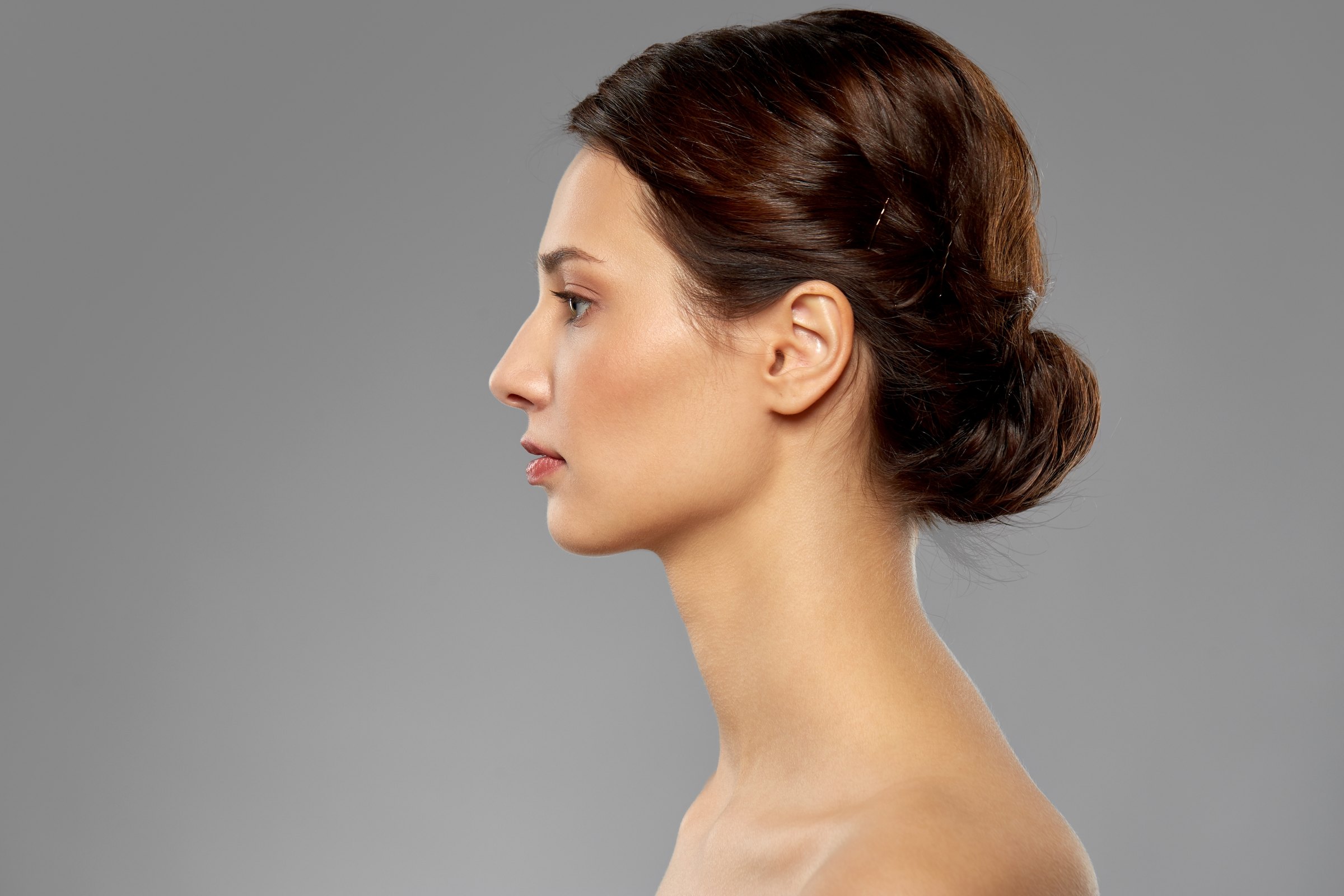
Profile portrait of a woman with her hair in a low bun against a grey background

Facial Contouring at a glance

Facial contouring is filler that changes the shape of the face rather than softening a line. Firm hyaluronic acid gel is placed against bone at the cheek, chin and jawline. Most plans use 2 to 4 syringes, and midface results last 12 to 18 months.

2–4
Syringes in a typical plan
Staged across two visits four to six weeks apart, so the first region reads properly before the second one is placed.

What is facial contouring?

Most people who ask about contouring want the shape changed, not a line softened. Structural filler placed on or near bone does that.

  • Three regions: midface, chin, mandibular border
  • A fold below is often lost support above.
  • Your profile carries more than the front view.

How does structural filler change facial shape?

What changes is the edge your face is built on. A firm gel against the periosteum, the living sheath over bone, holds that edge. Your bone sets the range.

  • Firm gel deep at bone; softer gel shallower.
  • A blunt cannula near the facial artery lowers the risk of vascular occlusion rather than removing it.
  • Symmetry read on your profile between deposits.
Portrait of a woman resting both hands against her cheeks, muted teal backgroundPortrait of a woman resting both hands against her cheeks, muted teal background

How these compare

RegionTypical product familyTypical volumeTypical durationFDA label status
Cheek and midfaceJuvéderm® Voluma® XC, Restylane® Contour or Lyft1 to 2 mL per side12 to 18 monthsOn-label for cheek augmentation and midface volume or contour deficiency in adults over 21
Chin projectionJuvéderm® Voluma® XC, Restylane® Defyne1 to 2 mL totalUp to about 12 monthsOn-label for chin augmentation to correct retrogenia, adults over 21
Jawline and angleJuvéderm® Volux® XC, or other firm gels2 to 4 mL total12 months labelled; 12 to 18 months typical in practiceOn-label with Volux® XC, off-label with other gels
TempleJuvéderm® Voluma® XC, Restylane® Lyft0.5 to 1 mL per sideAbout 12 monthsOn-label with Juvéderm® Voluma® XC; off-label with Restylane® Lyft

Find the row for the region driving the appearance — the four regions differ in product, volume, duration and FDA label status, so one row rarely stands in for another. Durations reflect product labelling and practice observation. Individual results vary.

Notes on the products named above

Juvéderm® Voluma® XC — FDA-approved for deep injection in the cheek for age-related midface volume deficit, and for chin augmentation to correct retrogenia, meaning a chin that sits back behind the lower lip, in adults over 21. Firm and cohesive, so it holds an edge at depth.

Juvéderm® Volux® XC — FDA-approved for improvement of jawline definition in adults over 21. It is the firmest gel in that family by the manufacturer's own specification, which is why it is reserved for the bony border rather than for soft tissue.

Restylane® Lyft and Restylane® Contour — Both are FDA-approved for cheek augmentation and the correction of midface contour deficiencies in adults over 21; the Restylane® Lyft indication is worded for age-related deficiency. Restylane® Contour is built to flex with an animated midface; Lyft is firmer and more granular. That is a handling difference, not a ranking.

Restylane® Defyne — FDA-approved for chin augmentation to correct retrogenia in adults over 21. Chosen when flexibility at the chin matters more than maximum firmness.

Hyaluronidase — Held on site at every filler appointment, and itself a prescription drug carrying its own allergy risk. It is what makes contouring with hyaluronic acid a largely reversible decision, and the reason biostimulators are treated as a slower one.

Sculptra® — Poly-L-lactic acid stimulates the patient's own collagen rather than filling, and hyaluronidase will not dissolve it. Its FDA approval covers facial wrinkles and folds, so volumising the midface and temple with it is off-label, which is why it runs at a smaller dose and on a longer timeline than structural filler.

How it goes

01

Assessment

We read your face together, front and profile, then review medications, bleeding risk, prior filler and dental work.

02

Sequence

You see the order first: region one read at two weeks, region two four to six weeks later.

03

Placement

Placement is the shortest part. Product goes in against bone, in small increments, by needle or cannula.

04

See results

Ask about follow-up timing, contact arrangements, and any additional charges before treatment.

Profile portrait of a woman with her hair in a low bun against a grey background
Most of this appointment is assessment and numbing: topical anesthetic for 20 minutes, then lidocaine in the gel.

What happens at a facial contouring appointment?

Swelling peaks at 24 to 72 hours.

  • No sedation, so no driver needed.
  • Lopsided swelling in the first week is expected.
  • Hyaluronidase and a written complication protocol on site.

How long do facial contouring results last?

Shape is visible the same day. Give it two weeks before you judge it. Plans are staged across two visits, four to six weeks apart.

Day one
shape plus swelling
Week two
Ask about follow-up timing, contact arrangements, and any additional charges before treatment.
Months 12 to 18
midface; jaw shorter

Who is facial contouring for?

A good candidate

  • A flat face with firm skin.
  • A chin that stops short on profile.
  • A mandibular border that fades before the angle.
  • Anyone able to stage treatment across two visits.
  • A complaint that resolves with one small change.
  • Men wanting jaw and chin definition, dosed differently.

Not a candidate

  • Known hypersensitivity to hyaluronic acid, to lidocaine, or to gram-positive bacterial proteins, and any history of anaphylaxis or severe multiple allergies.
  • A bleeding disorder, or anticoagulation that cannot be safely managed.
  • Significant skin laxity, where filler only adds weight.
  • A wish for somebody else's face.

A wait rather than a closed door

  • Pregnancy or breastfeeding.
  • Active infection, inflamed acne or broken skin.

The first 72 hours, and when to call

01
Keep pressure off for two weeks: no massage, no face-down sleeping.
02
Sleep on your back, head elevated, for two nights.
03
Rest ice over a cloth, 10 minutes on and 10 off, for 24 hours.
04
No exercise, sauna or hot yoga for 48 hours, no alcohol for 24.
05
Postpone dental work two weeks either side: mouth bacteria can settle around new filler.
06
Postpone facials, microneedling, laser and radiofrequency for two weeks.
07
Ask about follow-up timing, contact arrangements, and any additional charges before treatment.
Portrait of a woman with a close crop, eyes closed, hand at her facePortrait of a woman with long dark hair against a plain grey backgroundClose profile of a chin and jaw against a pale pink background

What patients ask

How many syringes will I actually need?

Most contouring plans use 2 to 4 syringes, staged across two visits. A chin alone often takes 1 to 2 mL, a midface 1 to 2 mL per side, and a jawline 2 to 4 mL.

Is facial contouring the same thing as facial balancing?

They overlap. Facial contouring is the structural half: it changes the shape of the cheek, chin and jaw with firm filler placed against bone. Balancing is the wider assessment that decides proportion across the whole face, including movement and soft tissue, and it can conclude that no filler is indicated at all. You do not have to know which one you want before you come.

Will filler in my cheeks make my face look bigger?

It can, if the product is placed laterally or in too large a volume. Product set high and forward on the zygomatic body reads as projection; the same gel spread towards the ear reads as width.

Can I just do my jawline and skip the cheeks?

Sometimes, yes. A young face with good midface support is a reasonable single-region plan. Often the border looks soft because support was lost above it, and defining an edge under descending tissue makes the lower face heavier.

How long does facial contouring last?

Midface filler typically lasts 12 to 18 months. The chin and jawline gels are labelled for up to about 12 months, and the jaw reads shorter because it moves with speech and chewing.

Does it hurt?

Most patients describe pressure rather than sharp pain, since the product is placed against bone. You are numbed twice: topical anesthetic for about 20 minutes, then lidocaine in the gel. The chin and jaw angle are tender.

What if I do not like it?

Hyaluronic acid has an antidote, and it is in the room: hyaluronidase breaks the gel into fragments your body clears. Worth knowing: dissolving is not instant, not perfectly selective, and sometimes takes more than one session. So a first visit places the smaller volume.

Is any of this off-label?

Some of it, and you hear which parts before you consent to anything. Cheek augmentation with Juvéderm® Voluma® XC, Restylane® Lyft and Restylane® Contour, and chin augmentation with Juvéderm® Voluma® XC and Restylane® Defyne, are FDA-approved indications in adults over 21, and Juvéderm® Volux® XC is FDA-approved for jawline definition in adults over 21. Juvéderm® Voluma® XC holds a US indication for temple hollowing in adults over 21, so the temple is on-label for that gel and off-label for every other gel named here. Jawline placement with gels other than Juvéderm® Volux® XC, and contouring with Sculptra®, are off-label. Off-label means the FDA approved the product, but not for that particular use: the product is the same, and that placement has not been through the approval process. Off-label use is legal and common in medicine, and each off-label placement is named on the written plan before consent.

What are the actual risks?

Common: bruising, swelling, tenderness, small lumps settling within two weeks. Less common: asymmetry, infection, or a nodule weeks to months later. Rare and serious: vascular occlusion, where filler enters a blood vessel and cuts off the blood supply to the skin it feeds, which can cause skin loss or, very rarely, vision loss that may not recover. Cannulas, hyaluronidase and a written protocol lower that risk rather than remove it. Prescribed blood thinners are not stopped for a cosmetic treatment.

How much does facial contouring cost in Columbus, OH?

Ask about follow-up timing, contact arrangements, and any additional charges before treatment.
Important safety information

This page is general information about facial contouring, not medical advice, and not a substitute for an in-person evaluation. Treatment requires a consultation and a medical eligibility review, and treatment is not offered where it is not indicated.

Individual results vary. Nothing here is a promise of a specific result. Temple placement is on-label with Juvéderm® Voluma® XC in adults over 21 and off-label with every other gel named here. Jawline placement with gels other than Juvéderm® Volux® XC, and contouring placement of Sculptra®, are off-label uses. Off-label use is legal and common in medicine, and the status of each product used is stated again at consultation.

Juvéderm®, Voluma® and Volux® are registered trademarks of Allergan Aesthetics, an AbbVie company. Restylane® and Sculptra® are registered trademarks of Galderma. Kybella® is a registered trademark of Allergan, Inc. Rouge Aesthetics is not affiliated with or endorsed by those companies.

Book

Start with a conversation

Visit us
101 Mill Street, Suite 210, Gahanna, OH 43230
Or call
(614) 425-1633
Treatments
Wrinkle RelaxersDermal FillersCollagen StimulatorsRegenerative
More
Intimate WellnessAnti-AgingFat ReductionFacial Balancing
Practice
AboutPricingMembershipContact
Legal
PrivacyPatient PrivacyAccessibilityResults

Rouge Aesthetics · 101 Mill Street, Suite 210, Gahanna, OH 43230 · (614) 425-1633
Individual results vary. This website provides general information and does not replace an individual consultation.