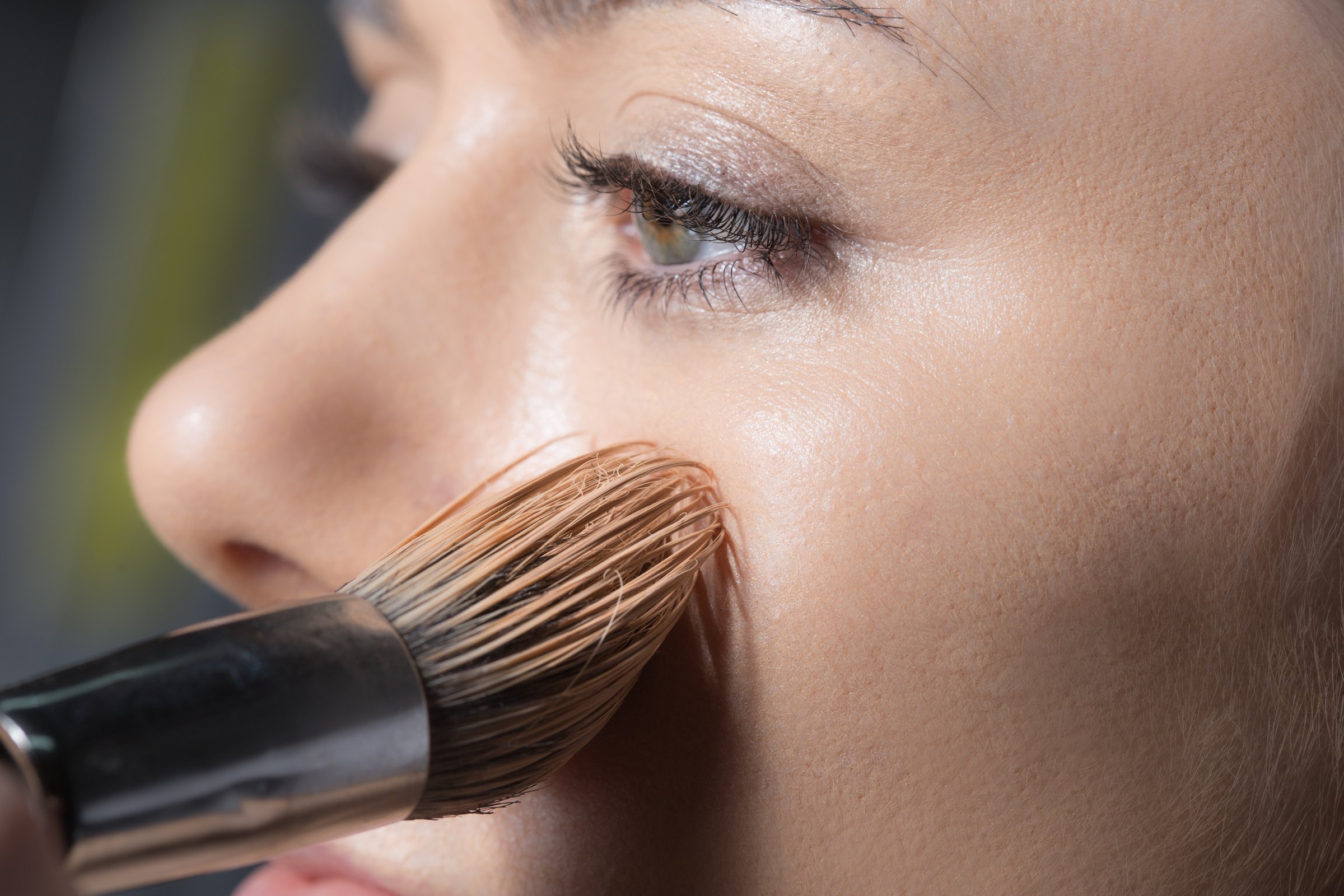
If something looks off and you cannot say where, that is what the assessment is for. Treatment runs in stages.
Book a consultationHave the whole face read
Facial balancing is a sequenced filler plan reading the midface, chin, jawline and lips together. It treats the region causing the complaint, in 2 to 4 stages over 6 to 12 months. The FDA approves these products region by region; no product is labeled for facial balancing itself.
Most arrive with one thing that bothers them, suspecting it is not the problem. We read your midface, chin, jawline, lips and temples as one structure.
The most useful thing you can do is turn sideways: projection is what a mirror hides. Volume is rebuilt with gel on the bone, in the supraperiosteal plane.


| Region | Typical product family | Typical first-stage volume | Label status for this region | Typical duration |
|---|---|---|---|---|
| Cheek and midface | Juvéderm® Voluma® XC, Restylane® Lyft | 1 to 2 mL | FDA-approved for cheek augmentation in adults over 21 | 12 to 18 months typical; up to 24 months in Juvéderm® Voluma® XC trials |
| Chin | Juvéderm® Voluma® XC, Restylane® Defyne | 0.5 to 2 mL | FDA-approved for chin augmentation in adults over 21 | 12 months in trials, 12 to 18 months typical |
| Jawline | Juvéderm® Volux® XC | 2 to 4 mL | FDA-approved for jawline definition in adults over 21 | 12 months in trials, 12 to 18 months typical in practice |
| Lips | Juvéderm® Ultra XC | 0.5 to 1 mL | FDA-approved for lip augmentation in adults over 21 | 9 to 12 months |
| Temples | Hyaluronic acid, product chosen at assessment | 1 to 2 mL | On-label with Juvéderm® Voluma® XC in adults over 21; off-label with every other gel | 12 to 18 months, observed rather than labeled |
| Diffuse midface thinning | Sculptra®, poly-L-lactic acid | 1 to 2 vials per session, typically three sessions | FDA-approved, in immune-competent people, for nasolabial fold contour deficiencies, other facial wrinkles and cheek wrinkles; midface and other areas off-label | Builds over 3 to 6 months, commonly persists up to 2 years, not reversible |
A plan's shape before you choose anything. Ranges reflect current U.S. product labeling, manufacturer trial follow-up and practice observation,
Juvéderm® Voluma® XC — FDA-approved for cheek augmentation to correct age-related midface volume deficit and for chin augmentation to improve chin retrusion, in adults over 21. A cohesive gel that holds shape against bone.
Juvéderm® Volux® XC — FDA-approved for improvement of jawline definition in adults over 21. Characterised by its manufacturer as the highest-lift gel in the Juvéderm® range, placed deep on bone, usually 2 to 4 mL for a jawline.
Restylane® Lyft — FDA-approved for cheek augmentation and correction of midface contour deficiencies in adults over 21. A granular gel rather than a cohesive one; the difference is handling and feel, not ranking.
Restylane® Defyne — FDA-approved for chin augmentation to correct retrogenia, meaning a chin that sits back behind the lower lip, in adults over 21, and for deep facial folds including the nasolabial folds. Chosen when a chin needs to move naturally with speech.
Juvéderm® Ultra XC — FDA-approved for lip augmentation in adults over 21. In a balancing plan the lips are usually treated after the chin, not before it.
Sculptra® — Poly-L-lactic acid, regulated in the United States as a device rather than a drug. FDA-approved, in immune-competent people, for correction of shallow to deep nasolabial fold contour deficiencies and other facial wrinkles, with cheek wrinkles added in 2023; use in the midface and elsewhere in the face is off-label. Labeling describes an average of three injection sessions, change builds over 3 to 6 months, and the effect commonly persists up to two years. It is not reversible.
Botox® Cosmetic or another neuromodulator — Botox® Cosmetic is FDA-approved for glabellar lines, lateral canthal lines, forehead lines and moderate to severe platysma prominence in adults. Masseter treatment for lower-face width is off-label, as is platysma treatment with a neuromodulator that does not carry that indication. Botox® Cosmetic is a prescription medicine and carries an FDA boxed warning about distant spread of toxin effect, meaning toxin acting beyond the injection site hours to weeks after treatment, which can cause life-threatening difficulty swallowing or breathing.
Hyaluronidase — FDA-approved as a dispersion agent to help other injected drugs absorb, not as a filler reversal agent, so dissolving hyaluronic acid with it is an off-label use. Kept on site for every filler appointment, including for suspected vascular occlusion. Sculptra® and other biostimulators, the products that work by prompting collagen rather than by adding gel, cannot be reversed this way.

Fixed-distance front and profile photography, before anything is marked. Nothing is opened, and nothing is decided that day.
The plan is written down: region order, product, volume, total range. Nothing is booked unless you ask.
Stage one treats the region carrying the structure, usually midface, chin or jaw. Volume starts low.
A two-week review with repeat photography decides whether stage two proceeds. A dropped stage is ordinary.

Filler entering a blood vessel, called vascular occlusion, can cut off the blood supply to the skin that vessel feeds, causing skin necrosis or, very rarely, vision loss. The FDA has issued a safety communication on unintentional injection of soft tissue filler into facial blood vessels, and it is the reason hyaluronidase, the enzyme that dissolves hyaluronic acid, and a written protocol for using it are kept in the room you are treated in. Discuss aftercare contact arrangements before treatment.
Filler is visible on the day. Give it two weeks before you judge it. Swelling peaks at 24 to 48 hours and resolves over 7 to 14 days.


Facial balancing usually uses less product than treating each complaint where it shows. A fold filled directly absorbs repeated syringes, standing in for support lost above it. The plan is written first, and any part can be dropped.
Most plans use 2 to 5 mL in total across all stages. A midface and chin plan often runs 2 to 3 mL. Plans including the jawline run higher, because the mandibular border takes 2 to 4 mL.
No. Facial balancing runs across 2 to 4 visits over 6 to 12 months. A region stays swollen for 7 to 14 days, and a swollen cheek hides the chin. A plan can stop after any stage.
Facial balancing is priced per syringe, published on the pricing page, so a plan's total is the sum of its stages rather than a package price. A two-region plan commonly lands in the low four figures.
Looking overdone is a question of dose and accumulation, not a property of filler. It builds when volume is added to the same plane over years. A written plan sets the total in advance, reviewed against fixed-distance photographs.
Yes, and for plenty of people that is the right answer. On profile, a normal lip can read as small when the chin sits behind the lip line. Worth looking at both first.
Hyaluronic acid at the midface, chin and jawline typically lasts 12 to 18 months, and lip placements last 9 to 12. Regions expire at different times, so maintenance runs region by region, not as an annual redo.
Some of it is, and you will hear exactly which parts, in writing, before you consent to anything. Cheek, chin, jawline and lip augmentation are FDA-approved indications for the products used. Juvéderm® Voluma® XC holds a US indication for temple hollowing in adults over 21, so the temple is on-label for that gel and off-label for every other gel named here. Tear trough placement is on-label for Juvéderm® Volbella® XC and off-label for the rest, and nasal placement is off-label for all of them, meaning the FDA has not reviewed those specific uses; filler in the nose also carries the highest vascular risk of any facial region. Masseter treatment with a neuromodulator and dissolving filler with hyaluronidase are off-label as well. Off-label use is legal and common in medicine, and it describes the state of the labeling rather than the strength of the evidence behind a use.
Yes. Hyaluronic acid filler can be dissolved with hyaluronidase, the enzyme that breaks the gel down, usually within days of asking. Dissolving filler is itself an off-label use of hyaluronidase, and that is stated before it is done. Sculptra® cannot be dissolved this way, because it prompts collagen rather than sitting in the tissue as gel.
Age is not the deciding variable; whether the finding is structural or age-related is. Short chin projection at 24 is a proportion that will not change. An edited photograph has no structure to reproduce.
Botox® Cosmetic is a prescription medicine. Botulinum toxin products carry a boxed warning: the effects of the toxin may spread from the injection site hours to weeks after treatment and can cause life-threatening difficulty swallowing or breathing. Seek emergency care if either occurs, and ask for the full prescribing information before treatment.
This page is general information, not medical advice. Facial balancing requires an in-person assessment and a medical eligibility review, and treatment is not offered where it is not indicated.
Individual results vary, and the ranges and images on this page are not a prediction. Durations and volumes are drawn from product labeling, manufacturer trial follow-up and practice observation. Label status runs product by product. Juvéderm® Voluma® XC carries a US temple indication and Juvéderm® Volbella® XC a US infraorbital indication, both in adults over 21; the temple and the tear trough are off-label with every other gel, as are nasal placement with any of them and Sculptra® used outside the nasolabial folds and other facial wrinkles, as is dissolving filler with hyaluronidase, which the FDA approves as a dispersion agent rather than as a filler reversal agent. Injectable risks include bruising, swelling, nodules and, rarely, vascular occlusion with skin necrosis or vision loss.
Juvéderm®, Voluma® and Volux® are registered trademarks of Allergan Aesthetics, an AbbVie company. Botox® and Botox® Cosmetic are registered trademarks of Allergan, Inc. Restylane® and Sculptra® are registered trademarks of Galderma. Rouge Aesthetics is not affiliated with, licensed by or endorsed by those companies.
Rouge Aesthetics · 101 Mill Street, Suite 210, Gahanna, OH 43230 · (614) 425-1633
Individual results vary. This website provides general information and does not replace an individual consultation.