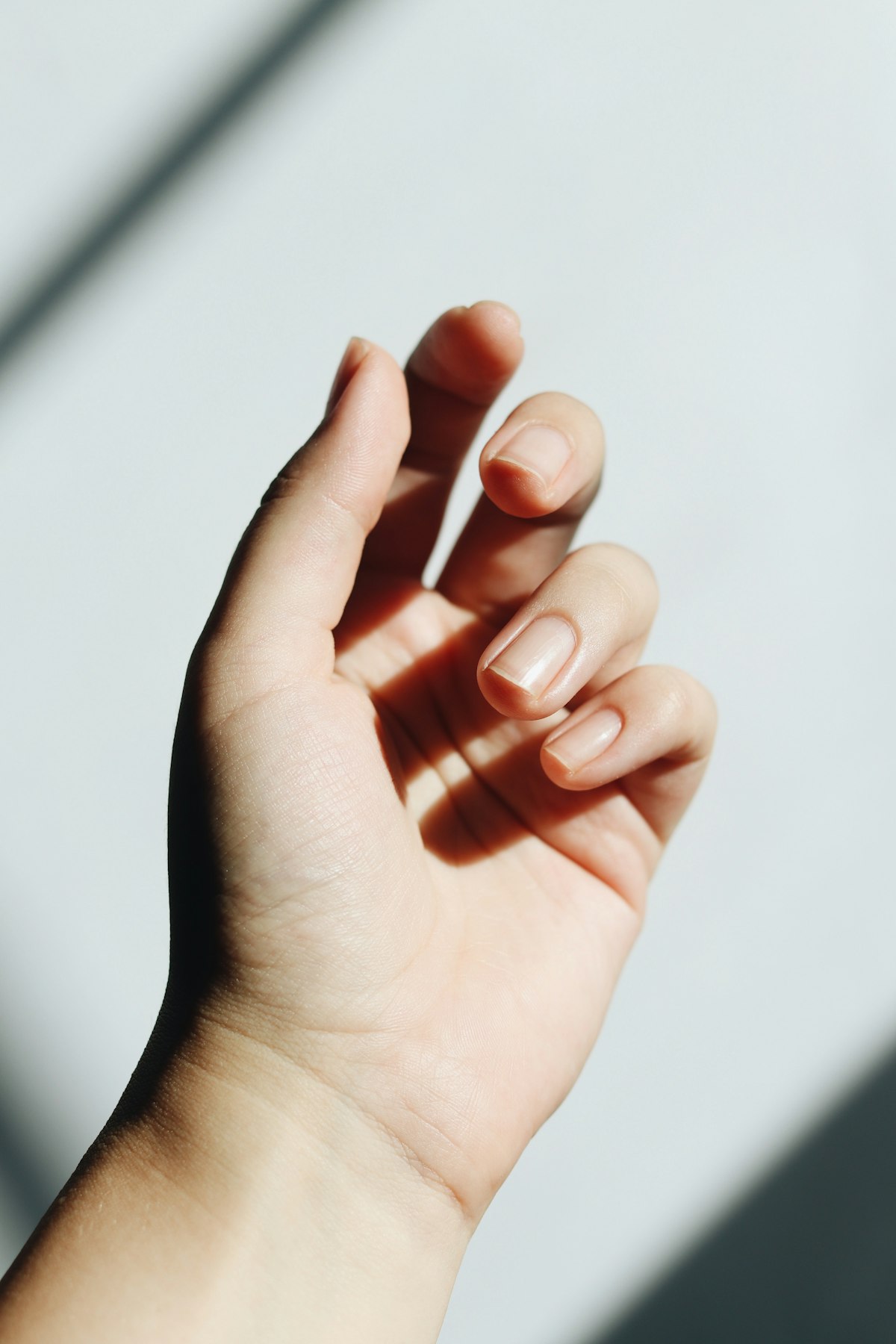
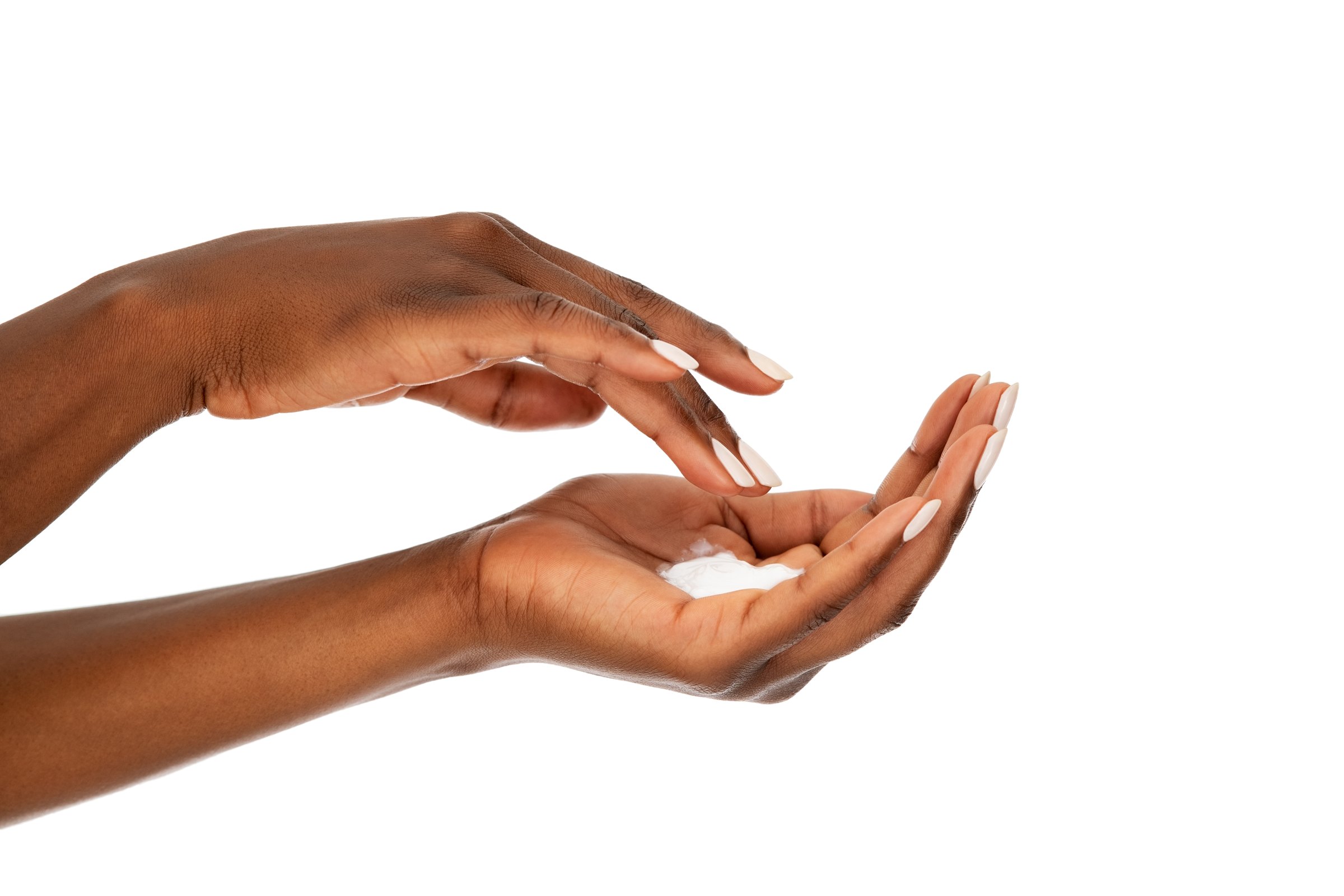
Hands read older than the face. What thins first is the layer above the extensor tendons. Restylane® Lyft is FDA-approved for this area; most patients use 1 to 2 mL per hand, and labeling permits up to 3.0 mL per hand in a single session.
Book a consultationSee what your hands need
Hand filler rebuilds the thin layer above the extensor tendons, so tendons and veins read less sharply. It is hyaluronic acid, 1 to 2 mL per hand, lasting 6 to 12 months. Restylane® Lyft is FDA-approved for this area in patients over 21, and filler does not change pigment or veins.
A thin layer separates skin from the extensor tendons. It thins early. Tendons, knuckles and veins read more sharply. Hand filler puts that layer back. It is hyaluronic acid, a sugar-based gel the body already makes and which holds many times its own weight in water, injected into the dorsal hand — and Restylane® Lyft is FDA-approved for hand augmentation to correct volume deficit in the dorsum of the hand, in patients over 21.
What changes is how much shadow the hand holds. The gel sits above the tendons and around the dorsal veins, the dorsal superficial lamina. A blunt cannula, a thin tube, pushes vessels aside. Most patients take 1 to 2 mL per hand, within the 3.0 mL per hand that labeling permits in a single session.


| Option | Material | FDA-approved for the dorsal hand | Typical duration | Reversible | Sessions |
|---|---|---|---|---|---|
| Restylane® Lyft | Hyaluronic acid with lidocaine | Yes | 6 to 12 months | Yes, with hyaluronidase | 1 |
| Sculptra® | Poly-L-lactic acid | No, off-label on the hands | Builds over 3 to 6 months, then gradual | No | Average of 3, up to 4, 4 to 6 weeks apart |
| Platelet-rich fibrin | Your own blood product | No — an unapproved use, not FDA-cleared | Weeks to a few months | No, resorbs on its own | 2 to 3 |
| Fat transfer | Your own fat | Surgical procedure, not a filler | Variable; a share of the graft does not survive | No | 1, surgical |
These options behave differently. Approval status is per current U.S. labeling; duration ranges combine labeling with clinical observation.
Restylane® Lyft with Lidocaine — FDA-approved for hand augmentation to correct volume deficit in the dorsum of the hand, in patients over 21. A firm, cross-linked hyaluronic acid gel, which is why it holds its shape in a mobile area. Reversible with hyaluronidase.
Hyaluronidase — Kept on site for every filler appointment. Not a cosmetic treatment, and not billed as one when it is used to correct work done here inside the review window.
Sculptra® — Use on the hands is off-label, meaning the FDA has not reviewed that particular use: the product is the same and the indication has not been through approval. Builds over 3 to 6 months across the average of three injection sessions labeling describes, and up to four, spaced 4 to 6 weeks apart, is not reversible, and is the wrong choice before an event.
Platelet-rich fibrin (PRF) — Neither FDA-approved nor FDA-cleared for hand volume, which makes it an unapproved use rather than an off-label one. The effect is smaller and shorter than a hyaluronic acid gel, because a platelet concentrate signals repair rather than occupying space, and the published evidence for the dorsal hand specifically is thin.
Both hands, at rest and in a fist, tendons and veins graded. Photographs at fixed distance and light.
The volume proposed per hand and the total cost are written down, along with the regulatory position: Restylane® Lyft is FDA-approved for this area. Risks, including swelling, nodules and rare vascular events, are named before you consent.
Topical anesthetic, then a blunt cannula through one or two entry points. Spread until the surface sits even.
You come back at two weeks, once swelling has resolved. Photographs repeat at the same light.

The massage afterwards is the least comfortable part. It is brief.
Give it two weeks before you judge it. Swelling makes the first week misleading. Restylane® Lyft is FDA-approved for the back of the hand and typically holds 6 to 12 months. The manufacturer's pivotal study measured improvement at 6 months, and the longer end of that range comes from clinical observation rather than from labeling. Your hands are in constant use, so gel breaks down faster than in the midface.


Inflated knuckles are a dosing decision, not a property of the gel. Under-fill can be added to at two weeks; placed gel has to be dissolved. The aim is softening the tendon outline, not erasing it.
The cost depends on your treatment plan. Call (614) 425-1633 for current pricing and ask what consultation, treatment, and follow-up charges apply.
Most patients use 1 to 2 mL per hand, and thinner hands with sharply visible tendons sit at the higher end. Restylane® Lyft labeling permits up to 3.0 mL per hand in a single session, and that figure is checked against current labeling at consultation. Both hands are usually treated in one session.
Pressure, mostly, rather than sharp pain, for three reasons. Topical anesthetic goes on first, the product contains lidocaine, and a blunt cannula avoids repeated needle passes. The massage afterwards lasts about 2 minutes per hand.
Expect visible swelling for 3 to 7 days. Hands swell more than the face: loose tissue, constant use. Bruising at the entry points can last a week. Rings feel tight for the first 48 hours.
Yes. Restylane® Lyft is a hyaluronic acid gel, and hyaluronidase, an enzyme, breaks it down at any point while it is in place. Hyaluronidase is kept on site. Calcium hydroxylapatite and poly-L-lactic acid products used here are not reversible.
It softens how sharply veins stand out, but does not remove them. Rebuilding the layer above a vein reduces the shadow and the ridged look. If prominent veins are your main complaint, that belongs with a vein specialist.
Not with this product. Restylane® Lyft holds an FDA approval for hand augmentation to correct volume deficit in the dorsum of the hand, so this is an on-label use in patients over 21. Off-label means the FDA has not reviewed that particular use: the product is the same, and the indication has not been through approval. Several other injectables used on hands, including poly-L-lactic acid, are off-label there. Whatever is used on your hands is named before you consent.
Usually yes, though the two are often staged. Treating them together concentrates swelling and bruising into one week, and makes it harder to read what is settling. Before an event, hands are treated at least 6 weeks ahead.
Ask about follow-up timing, contact arrangements, and any additional charges before treatment.

Rouge Aesthetics is a medical aesthetics practice. This page is general information, not medical advice, and not a substitute for an in-person evaluation. Treatment requires a consultation and a medical eligibility review, and treatment is provided only where it is indicated.
Individual results vary. Durations stated on this page are ranges observed in labeling and in clinical practice, not a promise of a specific result. Restylane® Lyft is FDA-approved for hand augmentation to correct volume deficit in the dorsum of the hand in patients over 21; use of poly-L-lactic acid on the hands is off-label, and platelet-rich fibrin is neither FDA-approved nor FDA-cleared for hand volume, which makes it an unapproved use rather than an off-label one; the status of each product used is stated again at consultation.
Restylane® and Sculptra® are registered trademarks of Galderma. Rouge Aesthetics is not affiliated with or endorsed by those companies.
Rouge Aesthetics · 101 Mill Street, Suite 210, Gahanna, OH 43230 · (614) 425-1633
Individual results vary. This website provides general information and does not replace an individual consultation.